Whether you’re a first-time DIYer or a more seasoned bench tech, having the right phone repair tools is basically the single biggest factor between getting a clean fix and basically ruining a device. A stripped screw, a torn flex cable, or even a cracked OLED panel because someone used a pry tool the wrong way… that little mistake can turn a $90 screen job into something like a $300 replacement, easy.
This guide touches every essential phone repair tool category, from basic entry-level kits all the way to professional grade diagnostic equipment, so you can work smarter, quicker, and with far less risk.
Basic Cellphone Repair Tools Every Beginner Needs
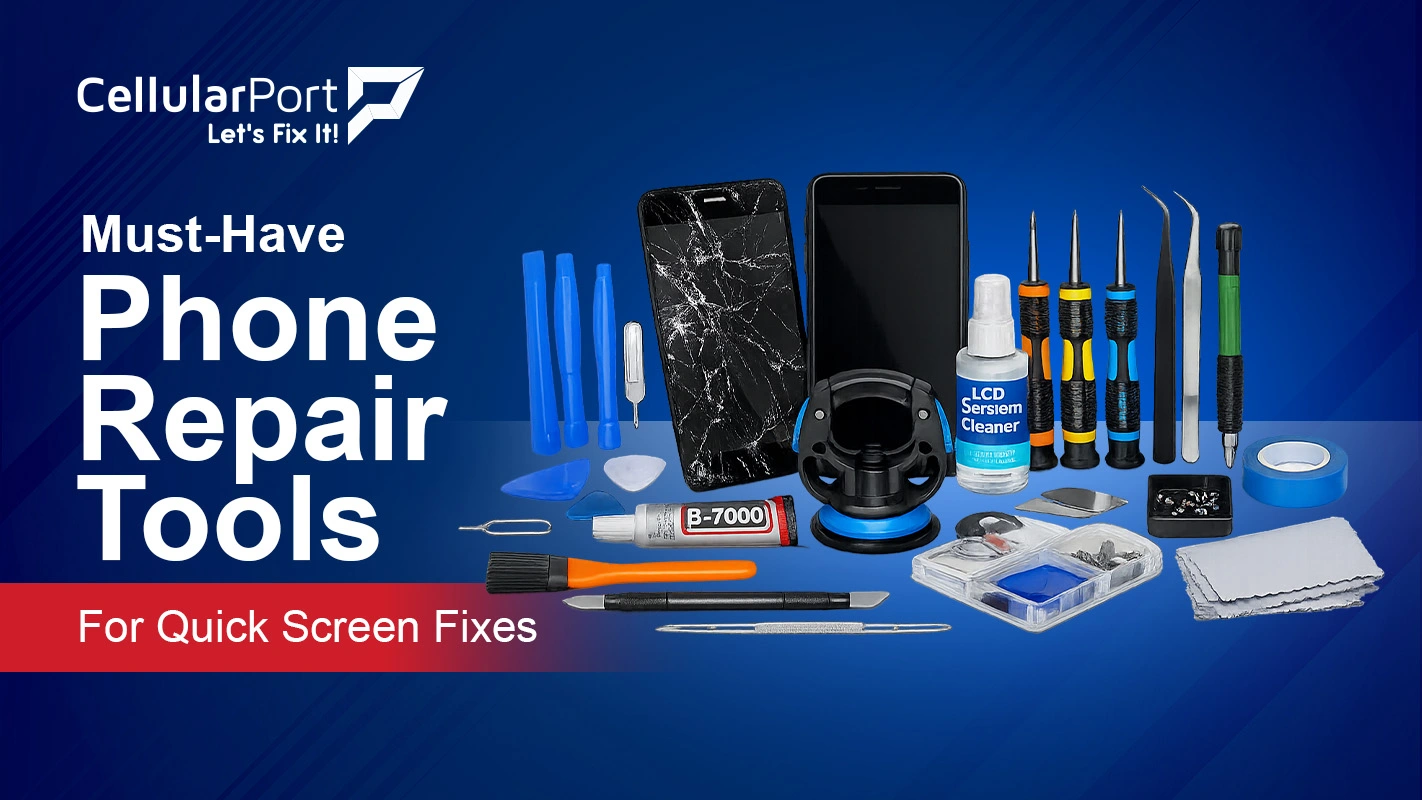
The foundation of any phone repair tool collection starts with a dependable set of basic cellphone repair tools. These are the things you’ll grab on every single job, no matter what the device is. Cutting corners here is where most beginners go wrong, like a $5 plastic pry tool that snaps mid job or a magnetic mat that loses its charge after a week, it just creates more trouble than it fixes.
- Plastic Pry Tools/Spudgers
- Magnetic Screw Mat
- Heat Gun/iOpener
- Suction Cup Handle
- Anti-Static Tweezers
- Adhesive Strips/B-7000 Glue
- Phone Repair Tool Screwdriver
No single item in your phone repair tools lineup really matters more than the screwdriver set, honestly. A solid phone repair tool screwdriver kit needs to handle several particular head types, modern phones use a sort of intentional mix of less common formats, to discourage casual take apart behaviour. Using the wrong head, even one time, can permanently strip a screw, and then you’re looking at a much more invasive extraction process after that.
Always use a precision torque screwdriver, not a standard household driver, for phone work. Phone screws are torqued to 0.02–0.05 Nm. If you over-tighten on reassembly, you strip threads in aluminium frames, which are basically impossible to repair without a milling machine.
Also Read: Phone Flashlight Not Working? Why It Happens & How to Fix
Phone Repair Kit, Beginner Vs. Professional Comparison
A well-assembled phone repair kit bundles essential tools at a price point matched to your repair volume. Here’s how beginner, mid-level, and professional phone repair kit options sort of stack up:
| Kit Level | What’s Included | Best For | Price Range |
|---|---|---|---|
|
Starter Kit |
5–8 screwdrivers, plastic pry tools, suction cup, spudger | Single personal device repair |
$15 – $35 |
|
Mid-Range Kit |
20–40 screwdriver bits, tweezers, heat mat, magnetic screw mat, opening picks | Regular DIY repairs across multiple devices | $40 – $90 |
|
Professional Kit |
60+ bits, torque driver, ESD mat, UV lamp, hot air station, adhesive, flex clamps | Repair shop technicians; high-volume work |
$120 – $350+ |
Best Phone Repair Diagnostics Tools for Technicians
For professional repair shops the best phone repair diagnostics tools for technicians, kind of go way beyond screwdrivers and suction cups. Diagnostic equipment helps split guesswork from precision, so technicians can tell exactly which part has failed before opening up the device, saving both time and parts cost. These are the core diagnostic tools repair phone pros lean on every day:
DC Power Supply
Simulates battery power during repair. It allows technicians to test motherboard behavior with precise current control, which is essential for water damage diagnosis, and other “it won’t wake up” problems.
Trinocular Microscope
40x–100x magnification for inspecting micro- soldering joints, torn flex connectors, and corrosion on board-level components you can’t really see with the naked eye. It’s simple but incredibly useful in real work.
Multimeter
Checks voltage, resistance, and continuity across circuits. It’s commonly used to trace short circuits and verify the charging port, battery, and power IC function.
JCID / Qianli Board Tester
Dedicated iPhone and Android diagnostic boards that run component-level tests for Touch ID, Face ID, battery health, camera, and baseband, without powering on the full device.
Thermal Camera
Finds hot spots on the motherboard caused by short circuits or damaged ICs. Honestly, it’s one of the fastest methods to locate fault points in water-affected or non-booting phones.
UV Curing Lamp
Cures UV-activated adhesive used in OLED screen bonding, and back glass repair in seconds. This is needed for professional-grade reassembly, especially when you want OEM-matched sealing accuracy.
Putting money into the best phone repair diagnostics tools for technicians, it tends to pay back fast, mostly because you cut down on parts wastage and you speed up the turnaround a bit. Like, a thermal camera for around $80 can prevent hundreds of dollars in wrongly swapped components, within the first month of real professional work. When you pick the proper tools repair phone, you find what’s actually wrong at the source, not only the surface issue.
Also Read: How to Check If Phone Vibration Is Working on Any Smartphone
Tips For Building Your Phone Repair Tools Collection
Whether you’re setting up a first phone repair kit or giving a proper professional bench an upgrade, these ideas sorta apply at basically every level:
- Buy ESD-safe tools from day one. Electrostatic discharge, ESD which is that static charge you can’t really see, can permanently harm logic boards and NAND flash memory. ESD-safe mats, wrist straps, and anti-static tweezers are not that expensive, and they help avoid the kind of mistakes that cost real money.
- Never reuse adhesive strips. Pre-cut adhesive strips are single-use. Trying to reuse them usually ends up with weak screen adhesion, more dust, and then worse waterproofing on IP-rated devices.
- Label your screws. Even if you’ve got a magnetic screw mat, it’s still smart to mark each area while you disassemble. Putting a 1.2mm screw in the spot for a 0.9mm screw can crack a logic board boss later during reassembly.
- Use opening picks over playing cards. Thin guitar picks or opening picks are more controlled and predictable than improvised tools. Playing cards can tear up and shred against sharp frame edges, and they leave little bits behind under the display.
- Invest in quality bits, not quantity. A 5-bit precision set from Wera or Wiha works better than some 120-bit set from an unknown brand. Tip accuracy and bit hardness matter way more than how many heads are packed into the kit.
Pro tip: Store your whole phone repair tools set in a labeled, foam-lined case. Tool organization affects your repair speed directly, a real technician who can grab the right tool in under 5 seconds tends to work about 30–40% faster than someone digging through loose bags.
Shop Phone Repair tools at CellularPort
CP Store has a curated set of all the right accessories you need for you phone to protect it from any repairs. Get on the website and browse our list of products today!